
The Psychological Impact of Patient Complaints
Few experiences in dentistry feel as destabilising or debilitating as receiving a complaint letter or legal correspondence about treatment that you have performed. Even for highly competent, ethical, and conscientious dentists, the psychological impact can be immediate and profound. Many describe the moment as a ‘punch to the stomach’ - a visceral shock followed by disbelief, fear, anger, or shame.
What is rarely discussed openly is that these reactions are not signs of fragility. They are normal neurobiological responses to perceived threat.
Why Complaints Feel So Threatening
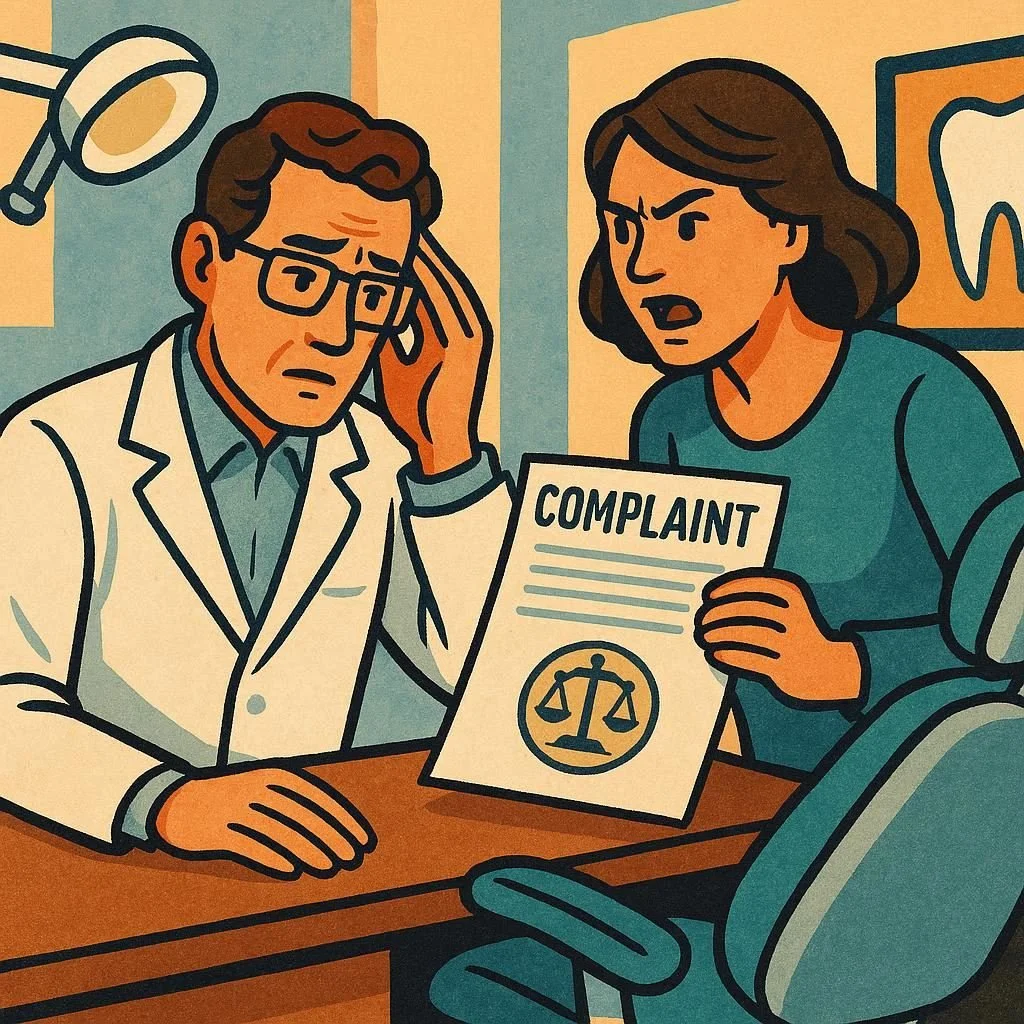
When a complaint or investigation arises, your brain does not interpret it as a routine administrative process. It often interprets it as a threat to three core domains: livelihood, reputation, and identity.
Dentistry is not just a job. For many practitioners, it is a central part of who you are – your professional identity built on years of training, sacrifice, and high personal standards. A complaint can feel like a direct attack on your competence and integrity.
The immediate impact is a surge in stress that might then alter your thinking patterns - replaying the clinical interaction repeatedly to see where things might have gone wrong, or what you could have done differently. This leads to difficulty sleeping, irritability and emotional withdrawal, catastrophic thinking about the worst-case scenarios of what might happen next, and even a loss in confidence in treating patients. These responses are common, and reflect a normal response to a stressful situation, not a lack of resilience.
The Hidden Cost of Ongoing Regulatory Stress
While the initial shock is acute, the real psychological toll often comes from duration. Complaints and regulatory processes can stretch over months or even years. During that time, uncertainty becomes chronic. Prolonged activation of the stress response can lead to persistent anxiety symptoms, depressive features such as low mood or hopelessness, social withdrawal, defensive clinical practice and emotional detachment from patients.
The longer the matter remains unresolved, the more you remain on high alert. It’s also why many dentists report feeling different even after the issue resolves. Le ss confident, more cautious, less joyful in practice.
Just toughen up?
Dental practitioners are high achievers who pride themselves on composure and competence. When an event such as a complaint arises and causes distress, some may default to self-criticism: I should be handling this better. Other dentists cope fine. I just need to toughen up.
Unfortunately, suppressing stress rarely eliminates it. Research consistently shows that emotional suppression prolongs recovery time. Attempting to ignore distress can intensify rumination - the repetitive mental replaying of events - which fuels anxiety and sleep disruption.
Strength in this context does not mean minimising the impact. It means responding strategically.
Managing Intrusive Thoughts and Rumination
One of the most distressing aspects of complaints is mental replay. You may find yourself revisiting every detail of the appointment, scrutinising wording, tone, or clinical decisions. Reflection is an important part of the learning and growth process. Many people have a defensive mindset, refusing to accept that they might have made an error.
It is vital to look back and see where there might be opportunities to improve. But reflection should be time-limited and purposeful. The trap is falling into rumination, where negative thoughts become repetitive and unproductive.
Confidence
It is normal to experience temporary loss of confidence after a patient complaint. There is a tendency to become overly cautious, practice more defensively or even to avoid certain procedures. A patient complaint, particularly one that involves lawyers or the Dental Board, can impact your professional identity. Being scrutinised in that role can feel profoundly personal. But a complaint does not define your competence or your character.
It is important to remember that confidence returns through continued experience and exposure, not avoidance. Take the time to review your practice, consult with peers for reassurance and re-engage incrementally with those areas of practice that feel challenging.
A Final Perspective
Complaints and legal or regulatory action are deeply stressful experiences even when outcomes are favourable. The emotional impact does not reflect weakness; it reflects humanity. Attending to your mental health during this time is critical to safeguarding your judgement, performance, and longevity in practice.