
For many professionals, work is something they do.
For many dentists, it is who they are.
From the first day of dental school, identity formation begins. Years of competitive entry, intensive training, technical mastery, and personal sacrifice shape not only skill but also self-concept. By the time you graduate and are practicing, ‘dentist’ may sit at the core of how you describe yourself to others and how you evaluate your own worth.
Professional pride is not the problem. In fact, it often drives excellence. The risk arises when identity and occupation become fused.
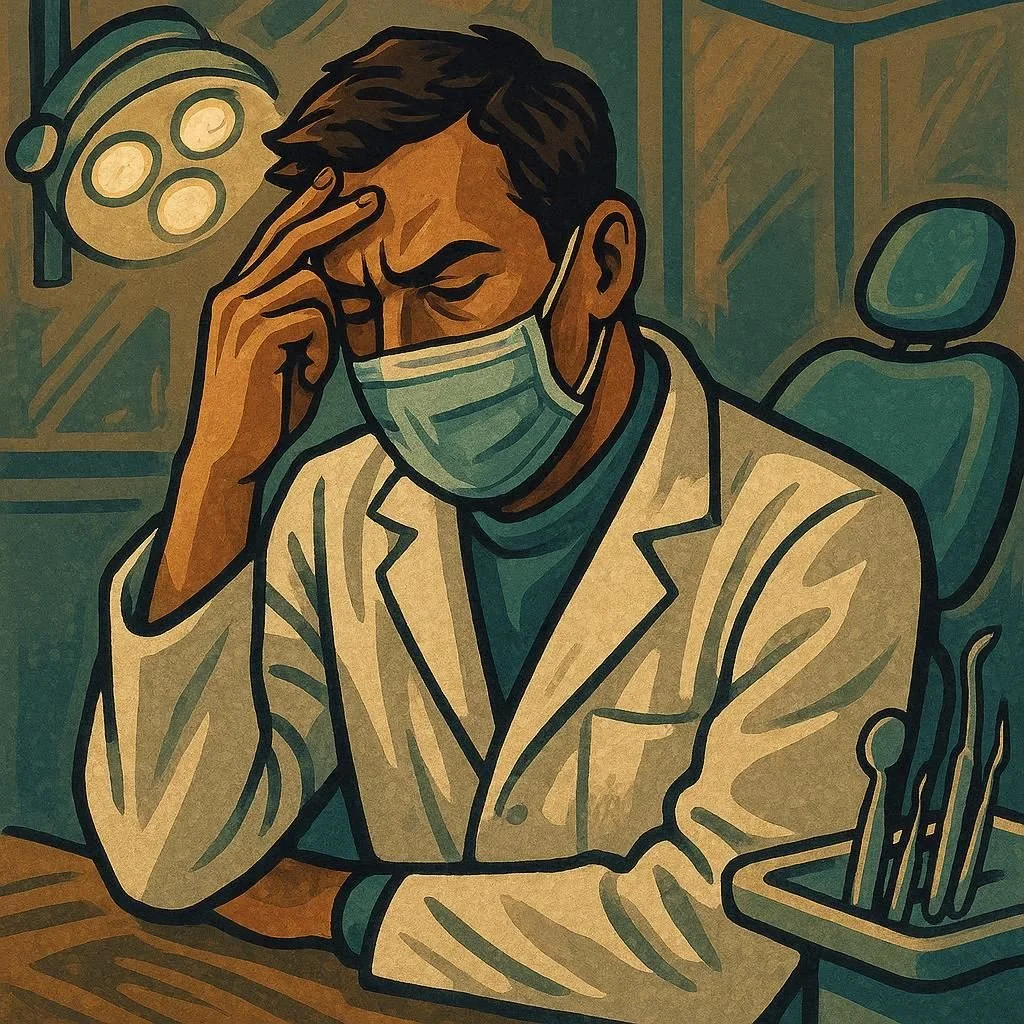
What Is Identity Fusion?
In psychology, identity fusion occurs when a role or group becomes inseparable from a sense of self. Instead of ‘I am a person who practices dentistry, the internal narrative shifts to one of ‘I am my clinical performance.’
When this occurs, professional setbacks are no longer situational – they become deeply personal. Because they strike at the heart of our identity.
A complaint is ‘evidence that I am inadequate.’
A complication is not an inherent risk of healthcare, but ‘proof that I am failing.’
The more tightly self-worth is tied to professional performance, the greater the psychological impact when things go wrong.
Dentistry carries several features that encourage over-identification:
1. High barriers to entry. Years of training and sacrifice reinforce the idea that becoming a dentist is a defining achievement.
2. Cultural reinforcement. Society often treats dentistry as a status identity rather than a job.
3. Precision-based evaluation. Clinical outcomes are measurable and scrutinised, making performance central.
4. Personal accountability. Unlike some professions, clinical decisions rest heavily on the individual practitioner.
5. Perfectionistic traits. Dentists are disproportionately high achievers who often equate competence with personal value.
It is easy to equate clinical success with personal worth. But the flip side is that clinical challenges represent personal failure
The Emotional Cost of Over-Identification
When identity is overly tied to dentistry, normal professional stressors generate disproportionate distress. Common patterns include:
Intense shame following minor mistakes
Persistent rumination after difficult cases
Fear of negative feedback beyond what is objectively warranted
Anxiety before routine procedures
Difficulty switching off after work
Avoidance of professional risks that support growth
Recovery from setbacks becomes slower and more painful because the event is interpreted as identity damage rather than situational difficulty. Over time, this dynamic increases vulnerability to burnout, depression, and chronic self-doubt.
Diversify your Identity
Broadening identity does not mean lowering standards or becoming less committed. It means recognising that your value as a human being extends beyond your productivity, technical precision, or professional reputation.
When identity is diversified to include your other roles - as partner, parent, friend, athlete, musician, or community member - setbacks in one domain do not destabilise the entire self. This identity flexibility is strongly associated with resilience.
A dentist who can think, ‘This was a difficult case, but it does not define me,’ recovers more quickly than one who thinks, ‘This means I am not good enough.’
Assess Your Identity Balance
Consider:
If I could no longer practice tomorrow, who would I be?
How much of my self-esteem rises and falls with my clinical day?
When I introduce myself socially, do I lead with my profession every time?
What roles bring me meaning that have nothing to do with dentistry?
These questions are not meant to diminish pride in your career. They are meant to illuminate whether your psychological eggs are all in one basket.
Career Transitions and Setbacks
Identity flexibility becomes especially important during inevitable transitions — reducing clinical hours, selling a practice, retiring, or facing health limitations.
Dentists who are solely defined by their profession often struggle profoundly during these phases. Those with broader identities adapt more smoothly because their sense of self remains intact.
A Sustainable Way to Be a Dentist
You can care deeply about dentistry without being consumed by it.
You can strive for excellence without equating it with worth.
You can experience professional challenges without interpreting them as personal defects.
Your skills, qualifications, and dedication matter enormously. But they are expressions of you - not the entirety of you.
When identity becomes more flexible, anxiety reduces. Shame softens. Confidence stabilises. And dentistry can return to being what it was meant to be: meaningful work performed by a whole, multidimensional human being.
Resilience is not just about coping with stress. It is about ensuring that who you are is larger than what you do.