
Building a Mentally Healthy Dental Team
Discussions about mental health and wellbeing in dentistry often focus on the individual, and on strategies to help them such as stress management, mindfulness, exercise, or resilience. While these approaches can be valuable, they do not tell the complete story. Dentistry is a team sport, and mental wellbeing is not solely an individual responsibility. The work environment plays a critical role in shaping the mental health and wellbeing of all members of the dental team.
This means that the culture of the dental practice matters. A supportive workplace can act as a protective factor against stress and burnout, while a dysfunctional one can amplify existing pressures. Building a mentally healthy dental team is therefore not only beneficial for staff wellbeing but also for patient care, staff retention, and the long-term success of the practice.
Why workplace culture matters
Every workplace has a culture, whether it is intentional or not. At its simplest, culture can be described as ‘the way we do things around here.’ It encompasses the beliefs, values, customs and behaviours of the group. Culture influences how people communicate, how mistakes are handled, how conflict is resolved, and whether individuals feel safe to speak up when they are struggling.
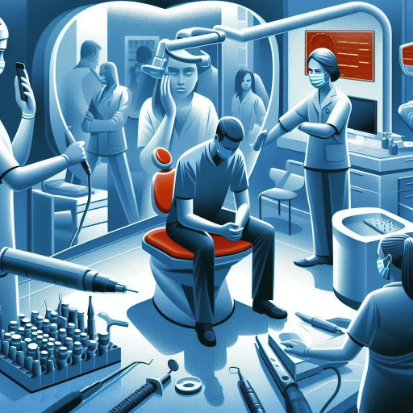
In dentistry, the stakes are high. Teams work in close proximity, often under time pressure, managing patient expectations while maintaining high standards of clinical care. Small tensions can quickly escalate if communication is poor or if team members do not feel supported or a valuable part of the team.
A positive workplace culture helps buffer these pressures. Team members who feel valued and respected are more likely to experience job satisfaction, engage positively with colleagues, and contribute to a collaborative working environment.
Conversely, a culture of blame can lead to negative feelings and behaviours and can contribute to stress and burnout.
Psychological safety in practice
One of the most important concepts in workplace wellbeing is psychological safety. Psychological safety refers to an environment where individuals feel comfortable expressing concerns, asking questions, admitting mistakes, and seeking support without fear of embarrassment or punishment.
In healthcare settings, psychological safety is particularly important because it directly affects patient care. Team members who feel unable to raise concerns may be less likely to identify errors, communicate risks, or ask for assistance when needed.
Psychological safety begins with leadership. Practice owners, principal dentists, and managers set the tone for how communication occurs within the team. When leaders demonstrate openness, humility, and respect, they create conditions where others feel able to do the same.
Communication is the key
Many workplace wellbeing challenges can be traced back to communication difficulties. Misunderstandings, assumptions, and unresolved conflicts can all create significant stress for individuals and teams.
Effective communication is more than just the exchange of information. It requires active listening, empathy, clarity, and mutual respect. Simple things can make a huge difference. Regular team meetings, opportunities for feedback, and clear expectations help reduce uncertainty and foster trust. Importantly, communication should not occur only when problems arise. Positive feedback and recognition are equally important components of a healthy workplace culture.
People who feel appreciated are more likely to remain engaged, motivated, and resilient during challenging periods. Psychological safety allows all members of the team the opportunity to speak up without fear of reprisals.
Recognising signs of distress
The close nature of work within a dental practice means that all members of the team are in a position to notice changes in mood or behaviour of colleagues. Increased irritability, withdrawal, reduced performance or frequent absences can all indicate that someone may be struggling.
Sometimes a simple conversation can make a meaningful difference. Asking a colleague how they are going and expressing genuine concern can help reduce isolation, create an opportunity for support and encourage help-seeking.
The goal is not necessarily to solve someone's problems but to create an environment where support is available and conversations about wellbeing are normalised.
Supporting wellbeing as a team
Building a mentally healthy workplace does not require complex programs or large budgets. Often, small consistent actions have the greatest impact, such as:
Encouraging regular breaks throughout the day.
Creating opportunities for peer support and mentoring.
Recognising achievements and contributions.
Promoting respectful communication.
Supporting flexible work arrangements where possible.
Encouraging access to professional support when needed.
These actions communicate an important message - wellbeing matters in this workplace.
A team responsibility
Mental health and wellbeing are often discussed as personal responsibilities. Yet we know that the workplace is an important contributor to stress and poor mental wellbeing. Therefore, a focus only on individual strategies will invariably fail.
A mentally healthy dental team is one where people feel supported, respected, and connected. It is a workplace where challenges can be discussed openly and where seeking help is viewed as a strength rather than a weakness.
Such environments benefit everyone. Staff are more likely to thrive, patients receive better care, and practices become more resilient and sustainable.
Ultimately, investing in workplace wellbeing is not simply about preventing problems. It is about creating the conditions in which individuals and teams can perform at their best.