
New Year, New You?
The clock has ticked over into the New Year, and for many people, the holidays are a distant memory as the reality of work kicks back in. New Year is often the time when people take stock and think about all the things that they want to improve in the coming 12 months.
The transition from one year to the next provides the opportunity to start afresh, but harnessing the motivation can sometimes prove elusive. For many people, the resolutions for self-improvement made in early January can quickly slip away as burden of work and home return. The real challenge is to ensure that any changes that you plan to implement are achievable and long lasting.
One of the most common resolutions is to reduce alcohol consumption – which is usually not surprising given that the Christmas and New Year holiday is invariably awash with celebratory drinks.
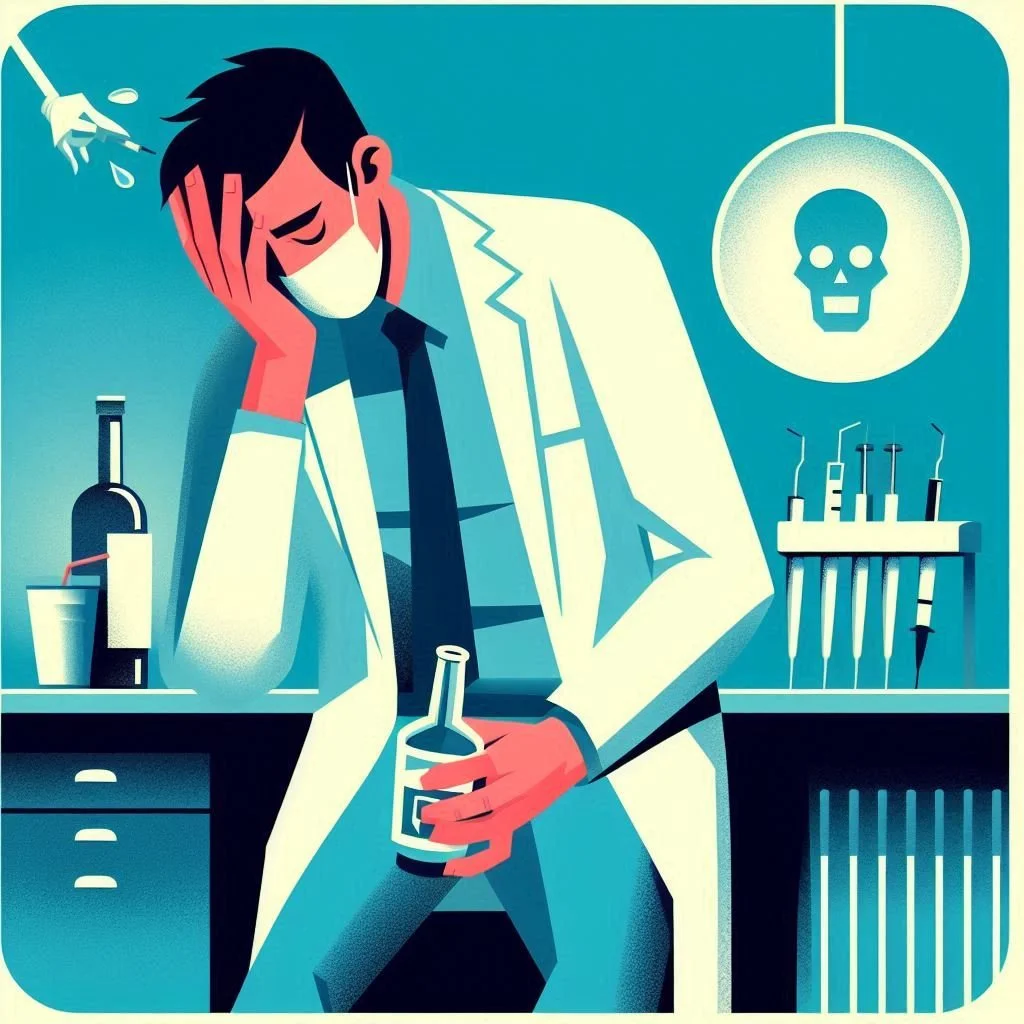
Excessive alcohol consumption has long been recognised as a concern amongst health professionals, both in terms of the risk of health concerns for the practitioner and also their ability to provide quality health care to their patients. And a recent study of dental practitioners found that approximately, one in six (17.3%) reported potentially hazardous or risky consumption of alcohol.
Harmful or hazardous drinking is often associated with higher levels of stress and anxiety levels, and coping with stress is one of the reasons many people turn to alcohol.
Excessive drinking can lead to various health issues, such as liver damage and heart problems. Addiction or alcohol use disorder is a significant public health concern in Australia. There is significant comorbidity between alcohol use disorders and other mental health disorders, with nearly half of females and one third of males with an alcohol use disorder meeting the criteria for an anxiety disorder, affective disorder or drug-use disorder. Alcohol and illicit substances are responsible for 7% of the national disease burden in Australia.
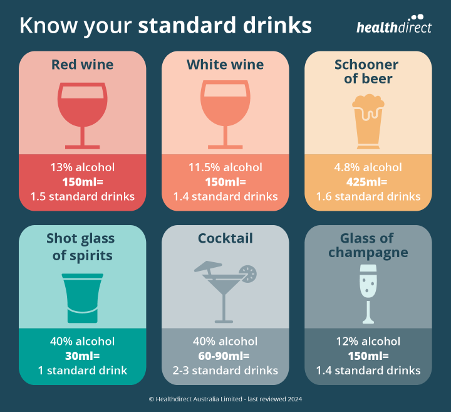
National guidelines from the Australian National Health and Medical Research Council Guidelines suggest that healthy adults should drink:
no more than 10 standard drinks a week
no more than 4 standard drinks in any 1 day
Want to check if your drinking is putting you at risk of harm? Take this quick, confidential assessment to find out more. The AUDIT tool is an effective and reliable screening tool for detecting risky and harmful drinking patterns.
If you are concerned about your drinking, you should seek support from your doctor.
National Alcohol and Other Drug Hotline
This hotline provides confidential support for people struggling with addiction. You can call the Alcohol Drug Information Service (ADIS) 24 hours a day, 7 days a week on 1800 250 015.